
Australian Shareholders Association Webinar
Nicole Kidd and Simon Davies recently presented to Australian Shareholders Association members on the role of real estate private credit...





Australian property has been a solid bedrock through the ups and downs of the economic cycles for many decades. The phrase “safe as houses” exists for a good reason.
Residential property is one of life’s essentials – everyone needs a place to call home. For this reason, housing costs are a significant contributor to Australia’s consumer price index (CPI) (making up 22% of the CPI basket in the December quarter of 2023).
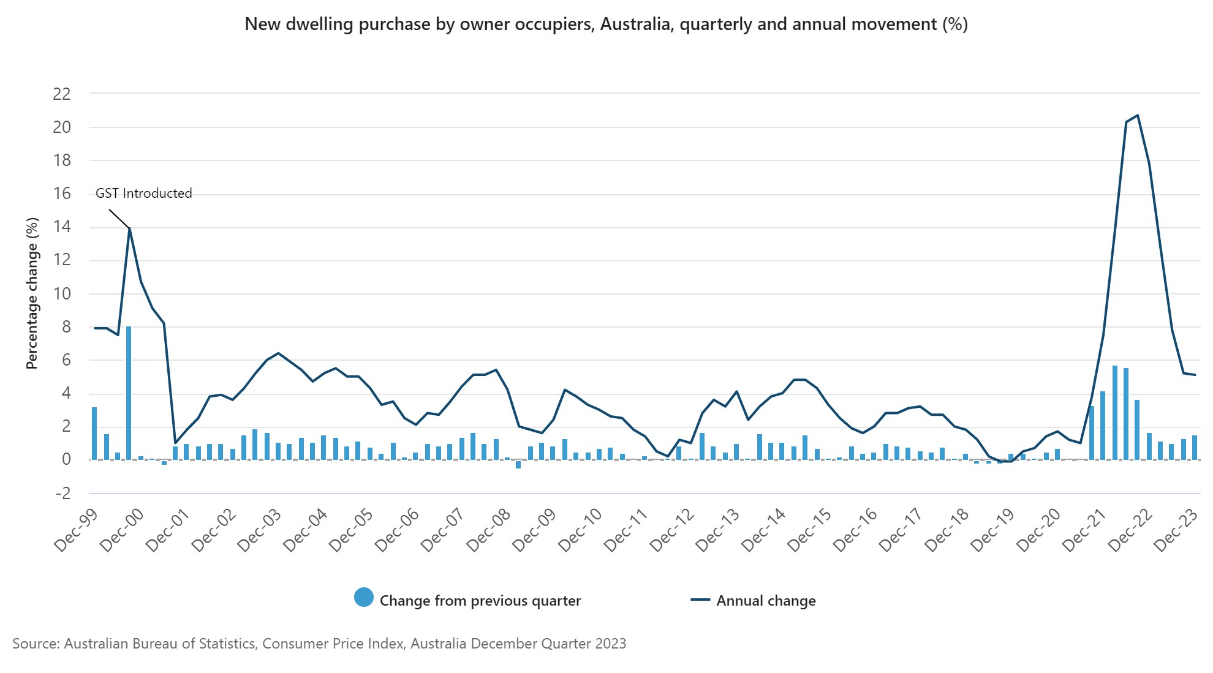
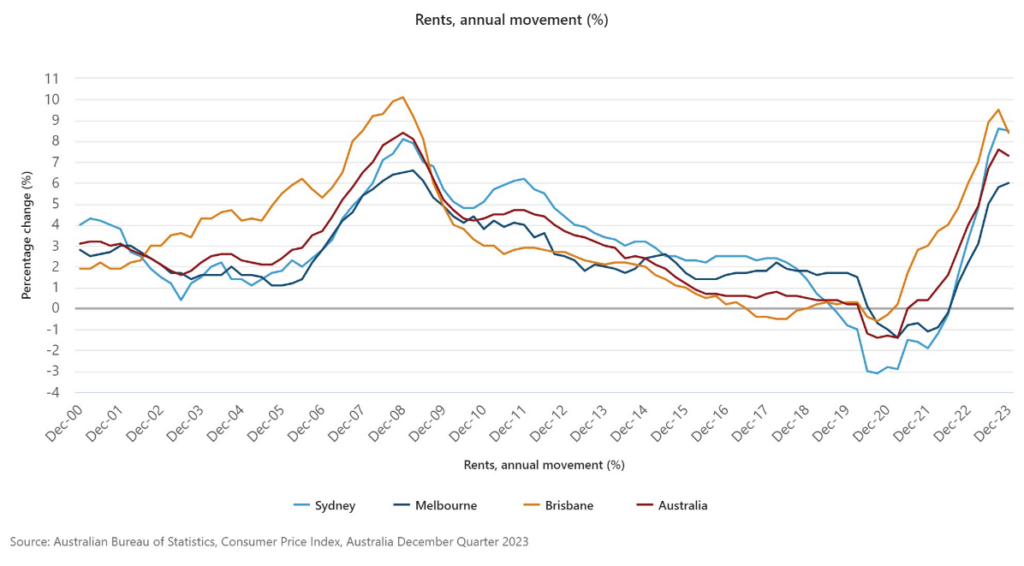
The charts below show the phenomenal increase in the costs of new dwellings and rents. While sales of existing dwellings are not captured in CPI data, dramatic increases in the cost of raw materials and supply-chain difficulties are actually a silver lining for residential property owners. It increases the value of and the demand for existing dwellings. Ownership of residential property provides a real protection against inflation.
Commercial and industrial property also have inflation-busting features. Many commercial leases have rental escalators tied to inflation or rent reviews at specific times. These all give real estate investors the opportunity to ensure their income generates a return above inflation.
Certain subsectors of specialty property are also characterized by very low levels of supply and substantial growth in demand. Student accommodation, data centres and industrial warehouses spring to mind as three such subsectors. Supply / demand imbalances make them an ideal inflation hedge.
Choose your assets wisely
However, investors can be caught unawares. By way of example, the Covid-19 pandemic has accelerated a number of trends, most notably working from home. This structural change has substantially weakened the pricing power for owners of office space and their ability to pass on inflationary increases to tenants is becoming severely limited. Many of the Australian listed real estate investment trusts have fallen victim to this with substantial writedowns on their office portfolios.
Regulatory changes (threatened and actual) such as increased taxes on short-term rental properties such as Air BnBs and recent talk of winding back negative gearing, can also make direct property investment fraught with uncertainty.
An alternative way?
Some investors are eschewing direct property investment entirely and capturing attractive yields through private real estate debt investing. Whether through real estate debt funds or individual mortgage loan syndicates, income-focused investors are capturing the benefits of interest rates being at or near their peak and without the administrative burden of managing property directly or the volatility of listed assets.

Nicole Kidd and Simon Davies recently presented to Australian Shareholders Association members on the role of real estate private credit...

In her latest discussion with Mitchell Sneddon on the Australian Investors Podcast, Nicole Kidd cuts through the spin of a...

Real estate credit investing has been attracting more attention from Australian investors with significant listed equities exposure and who are...
Receive property fund updates, market commentary, and expert analysis — straight to your inbox.